We appreciate your patience while we update our website.

Your Vagus Nerve Loves Reiki
Jocelyne LeBlanc
2/2/20266 min read
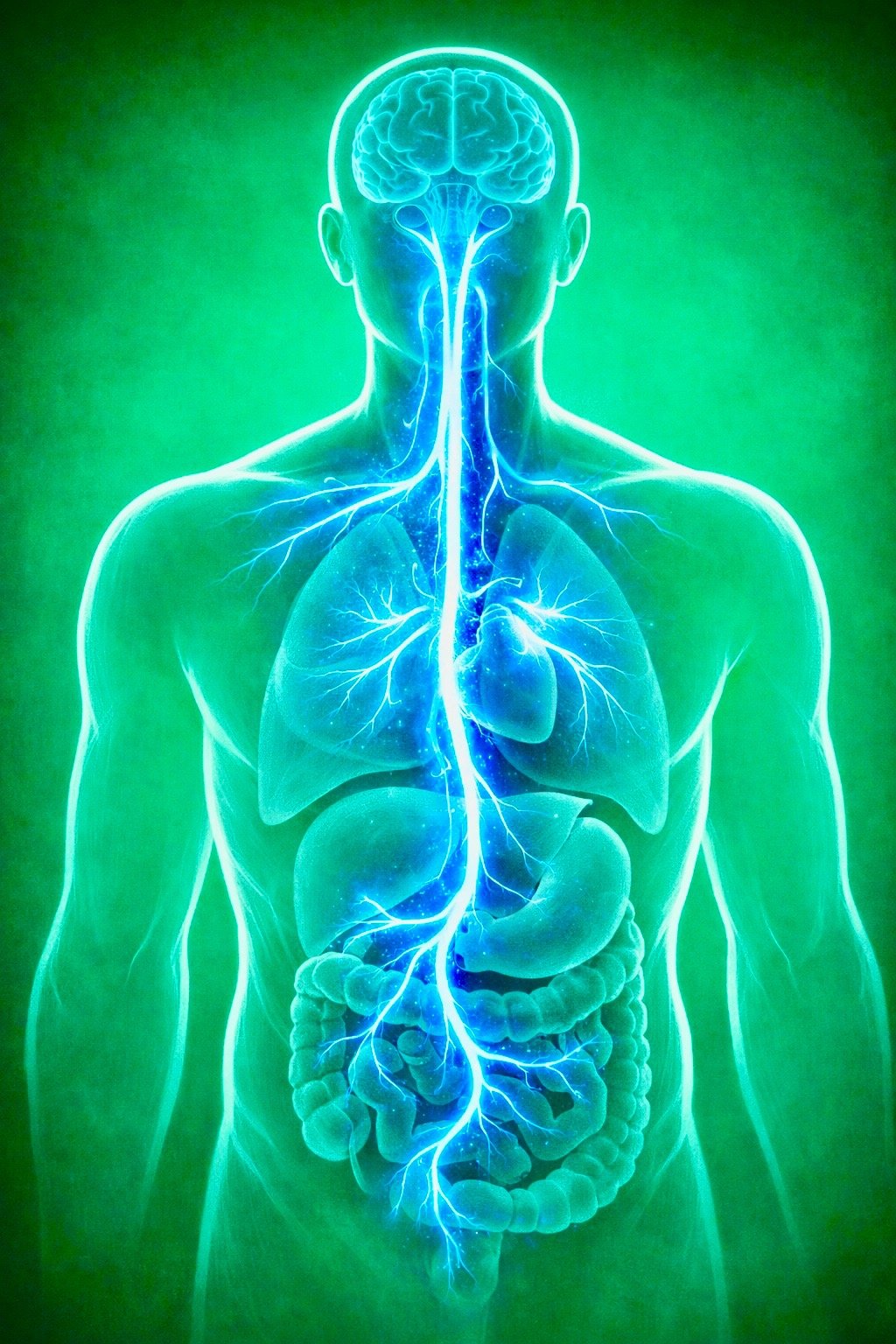
The vagus nerve, described as the “wanderer nerve,” is the longest nerve in the human body and controller of the parasympathetic nervous system. This is the system Reiki connects with to bring rest and relaxation.
The vagus nerve originates at the medulla oblongata, part of the brain stem, with one end forming the posterior (back) right vagus nerve and the other end the anterior (front) left vagus nerve. Moving down from the skull via the jugular foramen, the nerve travels the body extending branches throughout. From the brain stem it reaches to the lacrimal gland of the eyes, down the neck to the laryngeal box, the lungs, heart, the gallbladder, liver, stomach, spleen, pancreas, small and large intestines, kidneys, urinary bladder, ovaries and uterus in females, or the testes and scrotum in males.
The vagus nerve controls the parasympathetic nervous system—the rest and digest state—providing 75 percent of parasympathetic outflow to calm and relax the body. The nerve is involved in both sensory and motor functions. The highest concentration of terminal branches is located at the abdominal cavity, but there are generous amounts of branches going to the laryngeal area and the heart.
The gut and heart communicate to the brain via the vagus nerve.
The neurotransmitter acetylcholine (ACh) is widespread and is used throughout the central and peripheral nervous systems. Acetylcholine (travels via the vagus nerve to slow things down. It’s an anti-inflammatory agent.
The Many Roles of the Vagus Nerve
The vagus nerve is responsible for the regulation of internal organ function.
Anti-inflammatory Regulator
The vagus nerve is crucial for controlling inflammation throughout the human body.
Central Nervous System (CNS)
Sensory nerve cells in the nodose ganglia collect information from the body and send it to the brain through the relay center called the nucleus tractus solitarius (NTS). From there, this information is passed on to different parts of the central nervous system to initiate essential and involuntary bodily functions.
Digestion
The vagus nerve governs digestion. Its involvement in digestion includes receptors in the esophagus, stomach, small intestine, and salivary glands. In the intestines, it’s involved in smooth muscle contraction, intestinal glandular secretions, muscular and mucosal layers of the gut, and the celiac branch to the descending colon.
Eye Health & Tear Production
The lacrimal gland (tear producer) and vagus nerve are linked. As a key anti-inflammatory regulator, the vagus nerve influences overall tear film health. The facial nerve by way of the greater petrosal nerve directly controls lacrimal gland secretion with vagal nerve stimulation. Treating dry eye by supporting the parasympathetic nervous system (vagus nerve) promotes tear production and reduces redness, and can yield better results than treating the eye locally as it addresses underlying inflammation.
Heart
When activated, the vagus nerve releases the neurotransmitter acetylcholine at the ganglia surrounding the heart, binding to receptors to slow electrical impulses thus helping reduce heart rate. This is a vital function given that a lot of emotions are stored in the heart.
Heart Rate Variability
Monitoring the state of the vagus nerve can be done with measurement of heart rate variability (time between heartbeats). Living a joyful, positive, life maximizes heart rate variability. The stronger the vagus nerve is, the higher the heart rate variability.
Immune System Regulator
The vagus nerve is key in modulating inflammation, and helping the body recover from injury and fight disease. Immune system disorders have been linked to chronic inflammation.
Parasympathetic Nervous System Control
The parasympathetic nervous system is controlled by the vagus nerve promoting digestion, relaxation, and repair. It stimulates saliva, engages in the storage of nutrients, and slows down the heartbeat. As the primary parasympathetic nerve, it promotes "rest and digest" functions.
Reflex Actions
Coughing, gagging, sneezing, swallowing, and vomiting.
Respiratory Rate
The vagus nerve is the autonomic regulator of the respiratory rate. While the heart rate increases with inhalation, it slows down with exhalation. Engaging the parasympathetic state slows down breathing. The vagus nerve’s protective reflexes are mediated during apnea, coughing, and sneezing.
Swallowing and vocalization
The vagus nerve controls both larynx and pharynx functions. In the pharynx function, it is involved in motor control, coughing, the gag reflex. and preventing food from entering the nasal cavity.
The larynx function with vocalization controls movement of the vocal cords, and supplies the muscle involved in pitch control. It also provides sensory input to the laryngeal mucosa safeguarding this area preventing food from entering the trachea.
Symptoms of Vagus Nerve Problems
Abdominal bloating and pain
Acid reflux
Blood pressure changes
Dizziness
·ainting
Laryngitis
Nausea
Swallowing difficulties
Voice hoarseness
Vomiting
Weight loss (unexplained)
Wheezing
Activating the Vagus Nerve
The vagus nerve can shrink and become unresponsive following prolonged periods of stress. The good news is the vagus nerve can be regenerated. Practicing ways to help the vagus nerve calm you down ensures it is functioning optimally.
There are numerous ways to activate the vagus nerve and initiate the parasympathetic nervous system. Whenever any of the cranial nerves are engaged, the vagus nerve is activated. Anything we do to engage the vagus nerve helps bring calm.
Stimulating the Vagus Nerve
Aromatherapy
Lavender and Camomile are two major scents used in aromatherapy to bring calm. Other scents calming to the vagus nerve are bergamot, clary sage, neroli, sandalwood, vetiver, and ylang-ylang.
Breathing (deep slow)
The simple practice of conscious breathing is beneficial to the vagus nerve. Deep slow inhalation with equal timed exhalation is calming.
Celebrating small victories
Staying excited about small accomplishments fosters positive emotional health which benefits the vagus nerve.
Chanting, Humming, and Singing
Activate the laryngeal branches of the vagus nerve with humming, singing, or chanting.
Cold Exposure
Initial shock of cold exposure triggers the vagus nerve.
Connect with Heart Centre
Consciously connecting with the heart in day-to-day activities activates the vagus nerve which in turn generates positive feelings.
Cultivate awe and gratitude
Cultivating wonder and gratitude engages the cardiac branch of the vagus nerve. Feelings of awe and gratitude originate in the heart and are generated by the vagus nerve.
Digestion
Activating the intestinal branches of the vagus nerve brings calm. Feeling satiated after eating is complement of the vagus nerve.
Eating
The vagus nerve is activated with eating (salivating, swallowing, and tasting).
Emotional Regulation
Emotionally engage with the positive. Avoid reinforcing the negative.
Eye movement
The precious sense of seeing engages the vagus nerve. Whenever admiring, gazing, reading, and viewing stimulates the vagus nerve.
Flexing neck muscles
Engages the spinal accessory branch of the vagus nerve.
Laughing
Laughing engages three branches of the vagus nerve: the laryngeal, pulmonary, and trigeminal branches.
Massaging Vagus Nerve
Locate the trajectory of the vagus nerve coning from the head at the neck behind the ears and gently massage both sides including the trapezius muscle located at mid-upper-back.
<iframe width="560" height="315" src="https://www.youtube-nocookie.com/embed/fSN2CeDkslg?si=346kVPXALs5eMIZM&start=220" title="YouTube video player" frameborder="0" allow="accelerometer; autoplay; clipboard-write; encrypted-media; gyroscope; picture-in-picture; web-share" referrerpolicy="strict-origin-when-cross-origin" allowfullscreen></iframe>
Probiotics Consumption
Consuming probiotics in the form of fermented foods such as yogurt has been shown to activate the parasympathetic nervous system.
Reiki
Studies in people who are stressed have shown that the vagus nerve is activated during Reiki. Receiving Reiki activates the cardiac branch bringing calm and relaxation helping to lower heart rate and blood pressure.
Relaxation Techniques
Any activity that engages the parasympathetic nervous system stimulates the vagus nerve. Relaxation practices such as aromatherapy, bathing, soft massage therapy, meditation, Reiki, listening to music engage the vagus nerve.
Smiling
Smiling activates the trigeminal branch of the vagus nerve.
Smelling
The olfactory branch of the vagus nerve is activated when the sense of smell is engaged.
Vagal Nerve Stimulation (VNS)
Vagus nerve stimulation devices are showing great promise in treating various conditions in a more holistic way. The devices are now available and are used to treat depression and epilepsy. Additionally, a surgical procedure implants a VNS device in the body.
Treatment of Dry-Eye Disease
VNS is showing promise for modulating tear function and dry eye. VNS can reduce inflammation and improve tear production by calming the body and complementing the lacrimal nerve's role in basal tear formation.
Vagus nerve stimulation stimulates the lacrimal gland to produce tears (a parasympathetic function). The vagus nerve supports lacrimal gland function with the management of inflammation in this area and overall central nervous system balance resulting inn healthier tears, reducing redness, brain fog, and fatigue symptoms associated with dry eye disease (DED). The neurotransmitter, acetylcholine, plays an important role here too by calming the ocular surface and promoting hydration.
Other treatments in which VNS may prove useful include cluster headaches, inflammatory bowel disease (IBD), pain, post-traumatic stress disorder (PTSD), and rheumatoid arthritis (RA).
Connecting to the vagus nerve with Reiki helps enhance overall wellbeing by promoting the “rest and digest” state while engaging the parasympathetic nervous system. As discussed previously, there are many bodily functions which benefit from maintaining a healthy or highly toned vagus nerve. Regular Reiki treatments can form part of an integral wellness maintenance program in support of the vagus nerve.
Awareness
© 2026. Institute of Reiki. All rights reserved.
About